Financial and economic event contracts could give operators entering prediction markets a source of year-round customer engagement, according to an industry executive, as platforms expand beyond sports and elections into interest rates, corporate earnings and other financial outcomes.
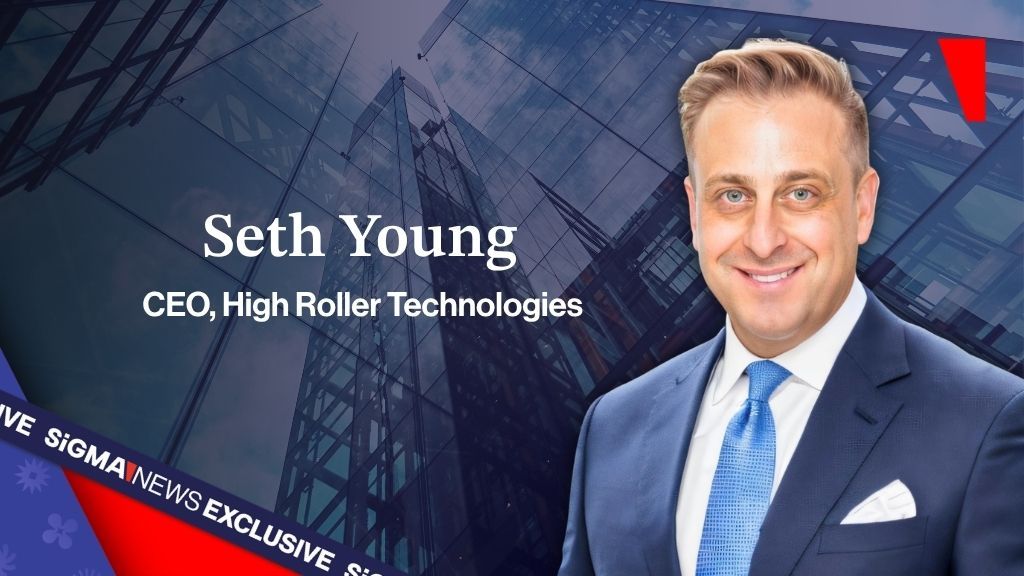
Speaking exclusively to SiGMA News, Seth Young, CEO of High Roller Technologies, said operators could transfer expertise in marketing, payments and customer retention, although product structures and regulatory requirements differ.
“Sports are seasonal, but the economy never takes the summer off. There’s always a jobs report, a rate decision, an earnings season around the corner,” Young said. “That’s year-round engagement; it’s only one example, and it’s one of the reasons why I keep calling this finance 2.0.”
Financial events widen opportunity
Young attributed growth to consumers familiar with mobile trading who want to express views on specific outcomes. “I think we’re witnessing a generational shift in how consumers engage in both wagering and trading, respectively,” he said. “What’s actually happening is that a whole generation of people who grew up trading on their phones just discovered they can take a position on the things they have opinions about.”
Sports and elections attracted mainstream attention, but Young argued that they represent only part of the opportunity. “But if you think prediction markets are just about who wins the Super Bowl, then you’re watching the pregame show and calling it the game.”
The expansion is bringing platforms closer to financial markets. Last month, Reuters reported that traders had wagered more than $220 million across around 31,000 equity-linked markets on Polymarket International through early September.
Sportsbook competition allows different strategies
A FullStory survey found that more than a third of respondents reported using traditional sportsbooks less frequently because of prediction markets. Young, nevertheless, challenged assumptions that every operator is pursuing an identical audience. “
I’m not sure I agree with the sentiment that every operator is fighting for the same user, and I would fundamentally disagree with anybody that suggests this is a winner-take-all market,” he said. “One of the most interesting elements of this vertical’s competitive landscape is how varied the market participants are, which I think speaks both to the breadth of the commercial opportunity and the breadth of the consumer base.”
Gaming expertise supports market entry
For iGaming businesses assessing entry, Young identified operational similarities in serving consumers, managing customer funds and running regulated platforms. “But a lot of the muscle memory transfers; marketing, CRM, payments, product feel, and so on. So it is in this sense that the ‘overlap’ has lent itself to the opportunity.”
He distinguished house-backed gambling from prediction exchanges facilitating transactions between traders. “In prediction markets, the operators are providing a marketplace for traders and do not have a vested interest in the outcome of the underlying event it is facilitating the buying and selling of contracts for.”
That distinction remains contested for sports contracts. The American Gaming Association argues that these products constitute sports betting and bypass state and tribal licensing, taxation and consumer protection requirements.
Corporate contracts raise integrity questions
Young said company-linked contracts allow customers to isolate an expectation rather than take broader exposure through shares.
“Buying a stock because you think a company will beat earnings is like ordering the whole menu because you want the fries,” he said. “A stock can move for a hundred reasons that have nothing to do with an individual’s investment thesis. In this case, an event contract lets you order the fries.”
“Near term, I think they move the conversation more than price. People are already screenshotting contract prices as a real-time read on what the crowd thinks,” he said.
Regulatory boundaries shape expansion
Young opposed applying identical frameworks to gambling and financial contracts. “Gaming is and should be regulated as gaming. Financial contracts are and should be regulated as financial contracts,” he said.
The Commodity Futures Trading Commission’s June rulemaking document describes prediction markets within its scope as registered venues offering event contracts structured as swaps or futures.
Young maintained that existing financial regulation provides supervisory tools. “Licensing and registration, capital requirements, market surveillance, customer protections, and so on, the regulation exists.”